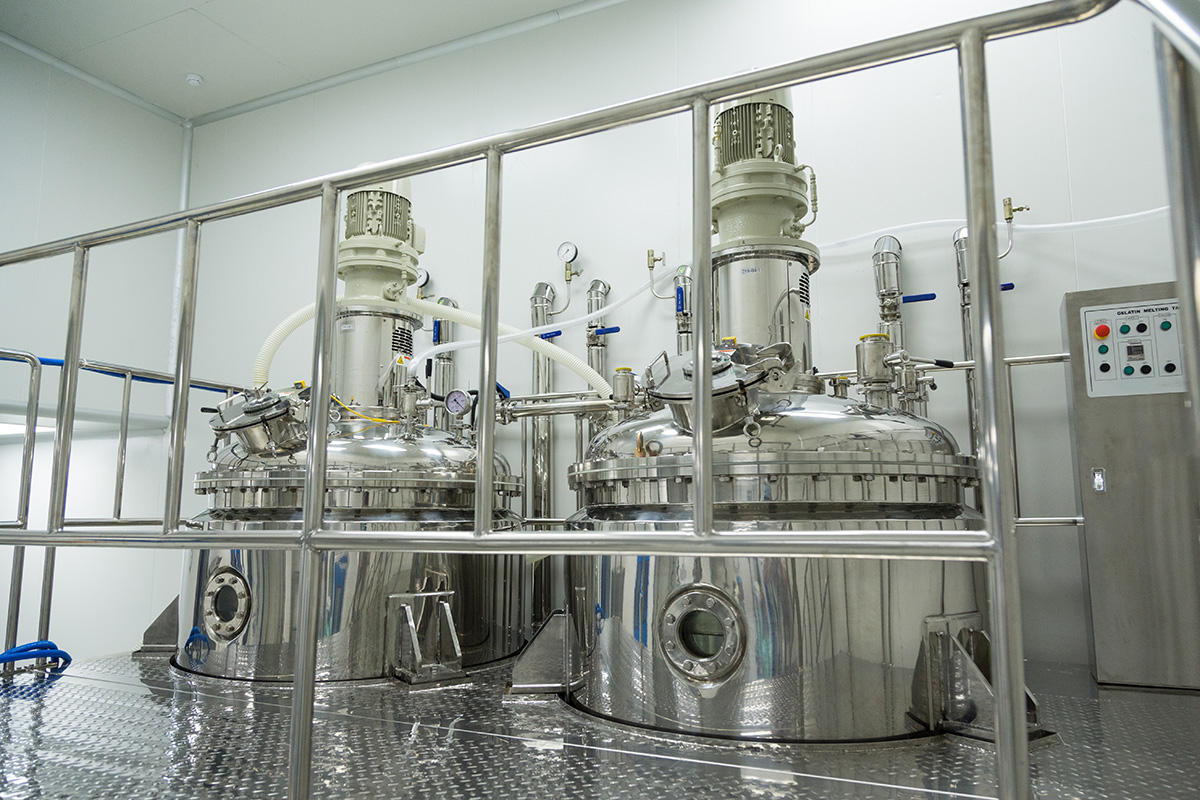
The most common layout for dry gas seal (DGS) systems in reactor mixers is the “back-to-back” double seal configuration. Depending on the characteristics of the sealed medium and the type of buffer gas used, the DGS system can be supplemented with an end labyrinth and an internal spiral groove seal. Specially designed seals are also available for reactor mixers with low rotor rotation frequencies.
Material selection for components (housing parts, seal faces, secondary seals, and other components) in DGS assemblies is done with consideration for their resistance to the corrosive effects of the sealed medium.
Technical specifications:
- Sealed pressure: Up to 40 kg/cm²
- Temperature in the sealing area: Up to 250°C (special designs can handle up to 450°C)
- Shaft diameter under the seal: Up to 200 mm
- Rotation frequency: From 0.5 rpm
Advantages of dry gas seal systems for reactor mixers:
- 100% Sealing of the Mixing Process: Ensures complete sealing of the critical mixing process, guaranteeing safety and efficiency.
- Reduced Energy Loss: DGS systems provide significantly more efficient energy utilization by reducing friction within the sealing system.
- Extended Seal Lifespan and Maintenance Cost Savings: DGS systems increase the lifespan of the seal, resulting in significant savings on repairs and spare parts.
- Lower Expenses for Buffer Gas Control Systems: DGS systems have simpler and more cost-effective buffer gas control systems, reducing operational costs.
- Reversible Execution: Some DGS systems can be supplied in a reversible (bi-directional rotation) configuration, simplifying installation, reducing maintenance time, and lowering the risk of assembly errors.